Menu
Call This Sunday to Get $50 Off
Do You Need a Plumber in Dallas, TX? Call us Now to Get $50 OFF
4.8 / 5 Ratings based on 1384 reviews Great Plumbers, Great Reviews

Call This Sunday to Get $50 Off


Gas line work sits in a category of home service where the margin for error is zero. A mistake that goes unnoticed behind a wall or under a floor doesn't stay unnoticed forever, and the consequences of gas line problems can be extremely dangerous. The technicians at Mr. Rooter Plumbing are here to help. Understanding what sets a qualified professional apart from someone without credentials is worth knowing before you let someone near your gas lines. Keep reading for a clear look at what licensing means and why it matters for your home.
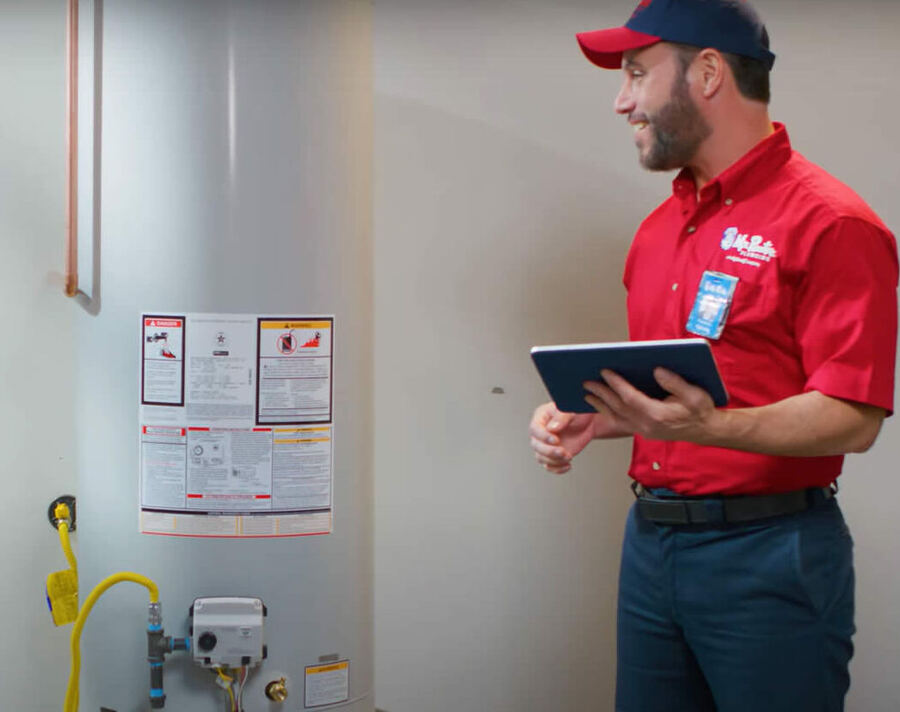
Water and gas move through a home in similar ways, but the risks they carry are not comparable. A leaking pipe causes water damage, but a leaking gas line can cause an explosion or fire. The difference in consequence is exactly why gas line work falls under a separate licensing category from standard plumbing repair service.
A qualified gas technician trains specifically on fuel gas codes, pressure testing procedures, and the properties of natural gas and propane. A general plumber knows pipe systems, but gas work requires an understanding of combustion, ventilation requirements, and how appliances interact with the supply line.
Licensing also means accountability. A credentialed technician carries liability coverage, pulls permits where required, and performs work that's inspected by local code officials. The paper trail protects you if something goes wrong and gives you a record of completed work when you sell the home.
Most homeowners don't think about their gas lines until something goes wrong. By then, the problem has usually been developing for a while. The most common issues that plumbers find during a repair service call include:
During a professional gas line inspection, the technician starts by shutting off the gas supply and attaching a pressure gauge to the system. They pressurize the line and monitor the gauge. A pressure drop indicates a leak somewhere in the system.
Then, the technician works section by section to isolate the problem. They use leak detection solutions or electronic gas detectors to pinpoint the exact location. Every connection, valve, and appliance shutoff gets checked. A plumber in Richardson, TX that's licensed for gas work also inspects the condition of flexible connectors, which degrade faster than rigid pipe and are a common source of leaks near appliances.
After the inspection, you receive a written report that documents what was found, what repairs are needed, and whether the system passed or failed pressure testing. If a gas line repair is required, the technician explains the scope before the work begins.
Licensing requirements for gas technicians vary by state and municipality. Before scheduling a gas line repair or any work on your gas system, ask the technician for their license number and the issuing authority. A legitimate professional gives you the information without hesitation.
You can verify the license through your state's contractor licensing board or department of labor website. Search the license number and confirm it's active and in good standing.
Also, confirm that the company carries general liability insurance and that the technician is covered under it. Ask whether the work requires a permit in your municipality. A qualified plumber doing gas work in an area that requires permits should pull one automatically. If a contractor tells you a permit isn't necessary when local code says otherwise, that's a problem.
DIY repairs have a reasonable place in home maintenance. Gas lines are not part of that category. The following tasks should only be handled by a licensed technician, regardless of how minor they appear:
Each of these tasks requires pressure testing after completion to confirm the repair holds. A homeowner who completes one of these repairs without testing has no way to confirm the connection is sealed. Gas leaks at low concentrations don't produce a smell strong enough to notice until the concentration climbs. By that point, any ignition source in the home creates a serious hazard. Calling a plumber for these jobs is the only way to confirm the work meets code and the line is safe to use.
If you have any reason to suspect a gas leak, notice a higher-than-usual gas bill, or are planning appliance work that involves your gas system, contact Mr. Rooter Plumbing to schedule an inspection. Our team provides gas line repair and a wide range of reliable plumbing repair service options. Call us today to schedule your appointment.
Gas line work sits in a category of home service where the margin for error…
Read More+
A yellow or brown ring on your ceiling is never just a cosmetic problem. Mr.…
Read More+
Sewer line problems rarely stay contained to the pipe itself, and by the time most…
Read More+
Standing in the hardware store aisle looking for toilet repair kits…
Read More+