Menu
Call This Monday to Get $50 Off
Do You Need a Plumber in Dallas, TX? Call us Now to Get $50 OFF
4.8 / 5 Ratings based on 1384 reviews Great Plumbers, Great Reviews

Call This Monday to Get $50 Off


Kitchen plumbing gets used more than almost any other system in the house, and constant use has a way of exposing weak spots fast. Drips, slow drains, and strange noises usually point to something mechanical or structural that won't correct itself on its own. At Mr. Rooter Plumbing, we see why kitchen plumbing problems never fix themselves and how delays change the scope of the repair. Read more to learn what's happening behind the cabinets and why early attention is so important.
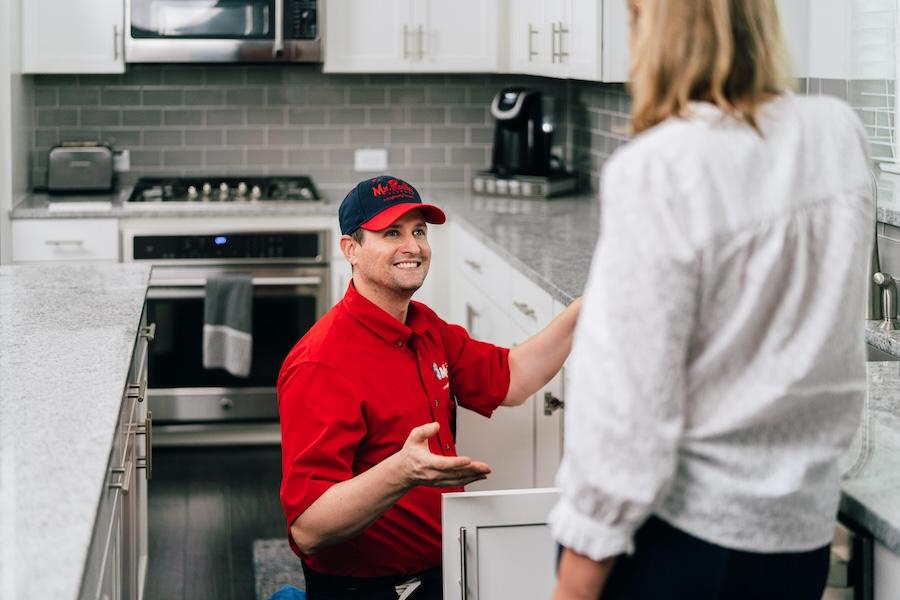
Every time you run water, open the faucet, or use the disposal, you're applying pressure to connections that weren't built to last forever. P-traps shift slightly with each drain cycle. Compression fittings loosen as temperature changes cause pipes to expand and contract. Rubber washers harden after thousands of hot water cycles and start to crack.
These changes happen incrementally, but they accumulate. A basket strainer that seals perfectly today might develop a slow seep in six months because the putty beneath it has dried out. A supply line that looks fine on the outside could have mineral deposits building up inside, which narrows the passage and increases pressure on the connection points.
You can't reverse mechanical wear by ignoring it. Once a gasket compresses beyond its elastic limit, it won't spring back. Once a threaded fitting loosens enough to let water seep through, the constant moisture will corrode the threads and make the problem worse. What starts as a minor nuisance becomes a full replacement job if left ignored for too long.
Grease doesn't disappear once it goes down the drain. It coats the inside of your pipes while it's still warm and liquid, then cools and solidifies into a sticky residue. Each time you wash another greasy pan, you add another layer. Food sticks to the coating and creates a matrix that catches everything else that flows through.
The buildup thickens over weeks and months. Water starts draining slower because the effective diameter of the pipe shrinks. You might pour hot water down the drain and think you've cleared it, but you've only softened the surface. The core remains, and it hardens again as soon as the temperature drops.
Chemical drain cleaners can't remove this kind of accumulation completely. They might burn through a small section, but they leave the rest intact. The partial clearing just delays the inevitable clog. A plumbing repair service in Allen, TX uses mechanical tools that scrape the pipe walls clean and restore full flow.
A drip under the sink signals that something has failed at a connection point. It could be a worn washer, a cracked compression nut, or a loose threaded joint. The drip itself isn't the problem. It's evidence that the seal has broken down and water is escaping where it shouldn't.
Water follows the path of least resistance, and once it finds a weak spot, it exploits it. The moisture around the leak promotes corrosion if the pipes are metal or encourages mold growth on nearby wood. Cabinet floors warp. Drywall beneath the sink softens and loses structural integrity.
Tightening the connection might stop the drip temporarily, but if the washer or gasket has already degraded, you're just compressing damaged material. The leak will return, and you'll have to take care of the root cause eventually. Replacing the failed component now prevents secondary damage to surrounding materials.
Tape, epoxy putty, and clamps might hold back water for a few days or weeks, but they don't do anything about what caused the failure. If a pipe cracked because of corrosion, wrapping it in tape won't stop the corrosion. The weak spot will continue to deteriorate underneath the patch.
Temporary repairs also create new problems. Epoxy putty can restrict water flow if it's applied too thickly. Hose clamps can crack brittle plastic pipes if overtightened. These quick fixes shift stress to adjacent sections of pipe, and you end up with a second failure right next to the first.
A plumber replaces the damaged section with materials rated for the application. The repair restores the system to its original design specifications instead of creating a weak link that will fail again under normal use. You save money in the long run because you're not repeating the same repair every few months.
Catching a problem early limits the scope of the repair. A leaking faucet repair might require a new cartridge and ten minutes of work. If you wait until the leak damages the countertop or the cabinet below, you're looking at carpentry costs on top of the plumbing bill.
Clogs follow the same pattern. A slow drain can be cleared with a snake in most cases. If you let the clog grow until it backs up into the dishwasher or causes an overflow, you're dealing with water damage, potential appliance repair, and a more invasive clearing process.
Professional inspections also catch issues you can't see. A technician looks at the entire system. They'll notice a supply line that's starting to swell or a trap that's corroding from the inside. Fixing these problems before they fail completely prevents emergency calls and the higher costs that come with urgent repairs.
Kitchen plumbing doesn't improve with age or neglect. Small issues compound into larger ones because the underlying causes remain active. A drip becomes a flood, a slow drain becomes a complete blockage, and a loose connection becomes a cabinet full of standing water.
Fixing problems when they first appear keeps repair costs manageable and prevents collateral damage to your kitchen. Contact Mr. Rooter Plumbing when you notice changes in how your kitchen plumbing performs. An experienced plumber will find the cause, explain your options, and complete the faucet repair correctly. We bring the tools and experience to solve problems the first time so you can get back to using your kitchen without worry.
Underground pipes spend decades under pressure, shifting soil, root systems, and corrosive conditions that never…
Read More+
If your basement takes on water after heavy rain, it can quickly lead to mold,…
Read More+
Kitchen cleanup moves faster when everything under the sink is working the way it should.…
Read More+
Pictures and descriptions only go so far, but real results from
Read More+