Menu
Call This Monday to Get $50 Off
Do You Need a Plumber in Dallas, TX? Call us Now to Get $50 OFF
4.8 / 5 Ratings based on 1384 reviews Great Plumbers, Great Reviews

Call This Monday to Get $50 Off


You probably never give a second thought to what happens inside your toilet tank as long as it's functioning properly. But if you're curious about the inner workings of a toilet tank, you've come to the right place.
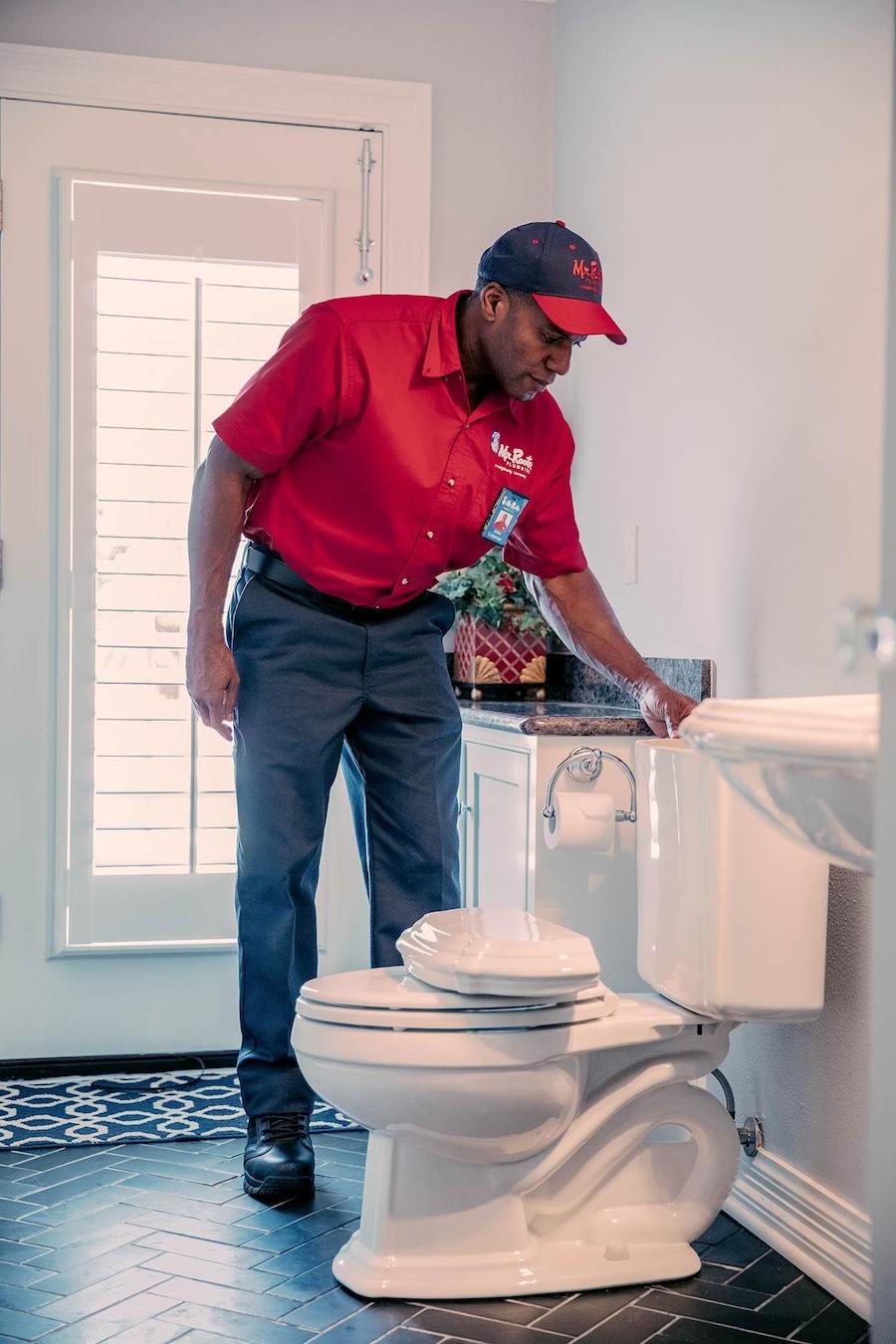
The professional plumbers at Mr. Rooter Plumbing understand the anatomy of a toilet tank inside and out. To help you understand how this essential plumbing fixture works, let's start by exploring its anatomy.
This is a lift wire that lifts the flapper valve to release water into the bowl. It connects the flushing handle to the flapper valve, making it possible to flush the toilet.
This is a tube that runs vertically inside the tank of a toilet. It’s responsible for directing excess water from the tank into the bowl to prevent overflowing. An overflow tube comes in handy when the water level in a toilet rises too high.
This is a piece of rubber or plastic that opens to allow water to exit the tank when you press the handle. Once the tank is empty, the flapper seals the opening between the tank and the bowl to prevent any more water from entering the bowl. Just like other parts of a toilet tank, flappers wear out over time, causing continuous running. If you suspect that your toilet is continuously running, contact a nearby plumbing repair service to help you fix the flapper or any other defective component.
This is a plastic tube that allows the tank to refill after each flush. The tube is connected to a water supply line and opens to allow water to flow into the tank. This component automatically shuts off the water supply once the water level rises to a sufficient level. The fill valve can crack over time, thereby interfering with a toilet’s flushing mechanism.
Replacing a faulty fill valve is as simple as unscrewing the mounting nut that holds the fill valve in place and swapping the old one for a new one. If you need professional help from a trusted plumber, get in touch with Mr. Rooter Plumbing.
If you’re experiencing any of these toilet tank issues or any other problem, call the experts at Mr. Rooter Plumbing for toilet repair services.
Do you need help fixing a faulty toilet tank? Is it time to replace your toilet? Mr. Rooter Plumbing is here to help. We take pride in providing a full range of services, including unclogging toilets, replacing defective components and full toilet replacement. Contact us today to schedule an appointment.
Underground pipes spend decades under pressure, shifting soil, root systems, and corrosive conditions that never…
Read More+
If your basement takes on water after heavy rain, it can quickly lead to mold,…
Read More+
Kitchen cleanup moves faster when everything under the sink is working the way it should.…
Read More+
Pictures and descriptions only go so far, but real results from
Read More+