Menu
Call This Friday to Get $50 Off
Do You Need a Plumber in Dallas, TX? Call us Now to Get $50 OFF
4.8 / 5 Ratings based on 1384 reviews Great Plumbers, Great Reviews

Call This Friday to Get $50 Off

If your basement takes on water after heavy rain, it can quickly lead to mold, foundation damage, and expensive repairs if left unprotected. Mr. Rooter Plumbing offers sump pump installation and a range of other water management solutions, and the situations we see most involve basements where the right systems were never put in place to begin with. Taking care of the problem correctly requires looking at the full picture. Keep reading for a breakdown of the most effective ways to keep water where it belongs.
Water doesn't need a wide opening to cause serious damage. It finds cracks in poured concrete, works through mortar joints in block walls, and seeps in where the foundation meets the footing. After a heavy rain, hydrostatic pressure builds up in saturated soil and pushes moisture through any weakness in the structure. The pressure doesn't release until the ground dries out, which means a single storm can put sustained force on your foundation walls for days.
Most basement water problems fall into two categories. Some water comes in through the walls and floor, while other water enters through surface-level openings like windows, doors, or gaps around utility lines. Knowing which type you're dealing with determines the right fix. Wall seepage tied to hydrostatic pressure calls for a different solution than a window well that's collecting runoff.
The reason water keeps returning is usually that the underlying cause was never acknowledged. If you only patch a crack without fixing drainage or grading issues, water will eventually find another way into your basement.
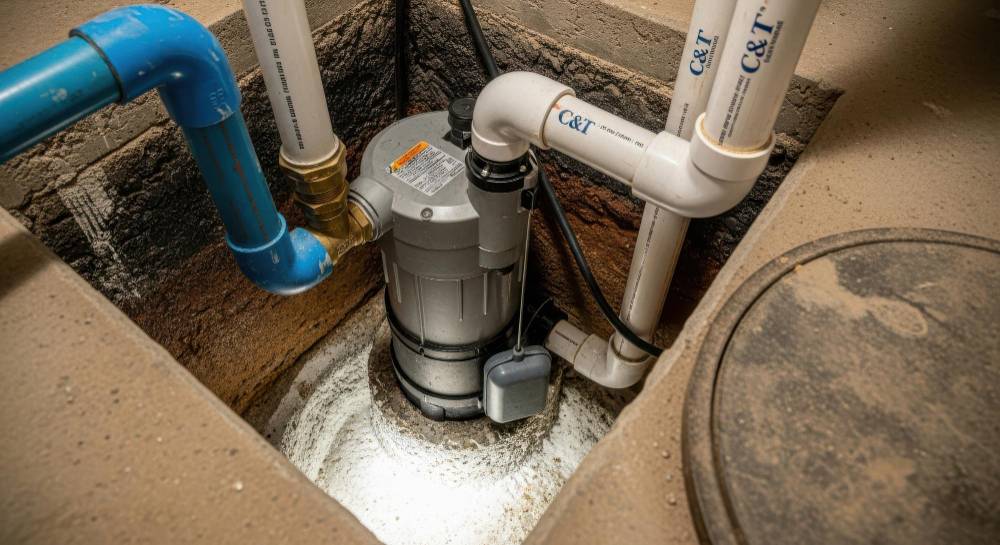
A sump pump sits in a pit dug at the lowest point of your basement floor. When groundwater rises high enough to enter the pit, the pump activates and moves the water out through a discharge line, away from the house. It's one of the most reliable tools available for basements in areas with high water tables, heavy seasonal rain, or clay-heavy soil that drains poorly. Not every basement needs one, but a few clear indicators point toward sump pump installation as the right call:
A battery backup system matters as much as the pump. Power outages and heavy storms tend to arrive together, and a pump that can't run in a blackout leaves your basement unprotected at exactly the wrong moment. A licensed plumber can check your drainage situation and recommend the right pump size and backup configuration for your setup.
Gutters and downspouts control where roof water lands. When they're clogged, damaged, or discharging too close to the foundation, they concentrate large volumes of water right where you don't want it. Most downspouts only extend a few inches from the house, but for effective protection, it's best if they reach at least four feet away. Extensions or underground drainage pipes can help move water farther.
Grading refers to how the ground around your home slopes. Proper grading directs water away from the foundation rather than toward it. The general standard is a drop of at least six inches over the first ten feet from the house. Settled or compacted soil near the foundation can reverse that slope and funnel water to the base of the wall. Correcting grade problems is one of the highest-return investments a homeowner can make before considering more involved waterproofing work.
These exterior fixes reduce the volume of water your foundation has to handle. They don't eliminate the need for interior waterproofing in a basement that's already taken on damage, but they lower the load on every other system in place. A plumbing repair service call that uncovers persistent drainage issues near the foundation often reveals grading and gutter problems as contributing factors.
The line between plumbing and waterproofing blurs in a basement. Some water problems start with a failed sump pump, a cracked drain line, or a backed-up floor drain. Those are plumbing issues. Others involve hydrostatic pressure, wall cracks, or foundation deterioration. Those belong to a waterproofing contractor. Many basements have both problems running at the same time.
An experienced plumber can take care of the mechanical and drainage side: sump pump installation, drain line repair, ejector pumps, and water supply issues. A waterproofing specialist handles wall coatings, interior drain tile systems, and crack injection. If you're unsure where your problem falls, start with a reliable plumber. They can rule out mechanical failure and active leaks before a waterproofing company begins more invasive work.
Calling the wrong contractor first can cost time and money. A waterproofing crew that installs an interior drainage system won't fix a broken sump pump float switch or a drain line pitched the wrong direction. Getting a plumbing repair service involved early means any mechanical issues get diagnosed and corrected before they undermine other waterproofing work. From there, both trades can coordinate if the situation calls for it.
Mold can begin developing within 24 to 48 hours of a flooding event, and structural repairs to a damaged foundation cost much more than preventive services that would have stopped the problem earlier. Mr. Rooter Plumbing provides sump pump installation, drain line inspection, and plumbing repair service for homeowners dealing with water issues in their basements. Our team can identify the mechanical and drainage problems and recommend solutions based on what your home needs. Contact us to schedule a visit today.
If your basement takes on water after heavy rain, it can quickly lead to mold,…
Read More+
Kitchen cleanup moves faster when everything under the sink is working the way it should.…
Read More+
Pictures and descriptions only go so far, but real results from
Read More+
Pictures and descriptions only go so far, but real results from
Read More+